
#golf #golers #golfcontroversies #putt #golf swing #
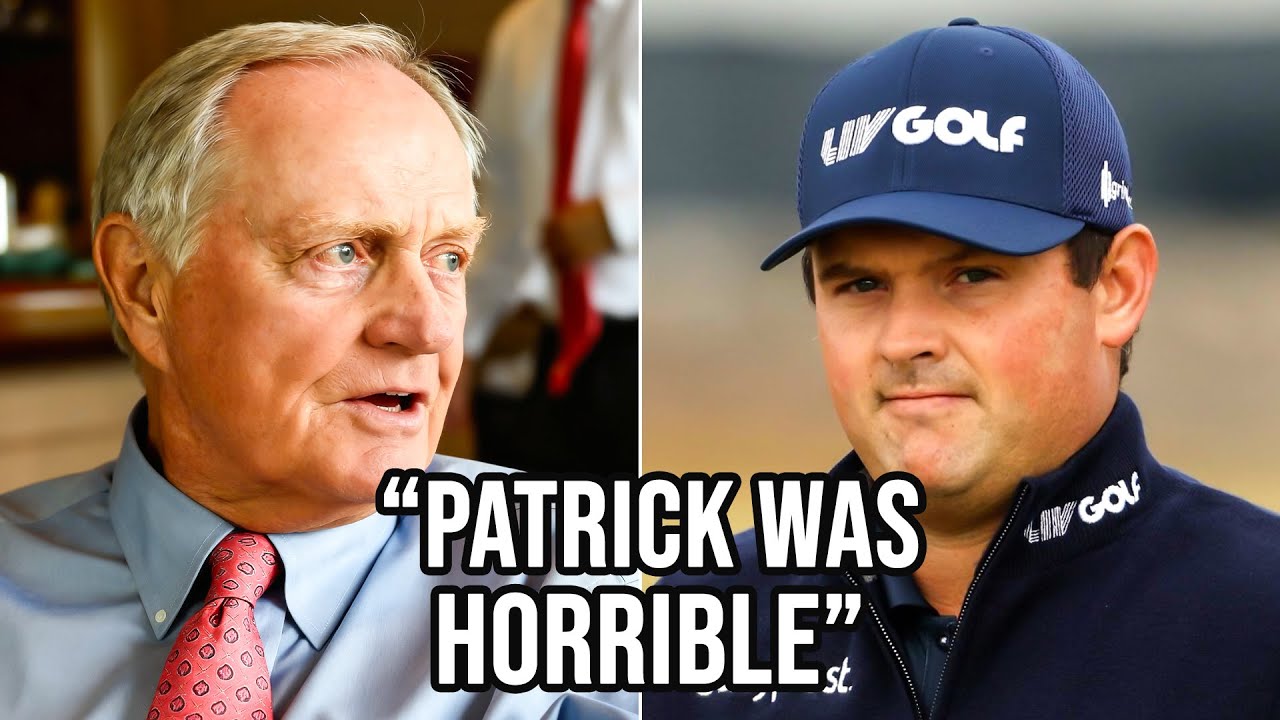
final round to Augusta this year. You know, I have I have huge respect for Patrick and how he plays the game. You got to ask, is it cheating? And he said, “No, we just, you know, broke the rules.” Patrick Reed, the name alone makes golf fans lean in. Some legends called him horrible. They said he was the worst. But behind all the yelling and fingerpointing, there is a much bigger story. One about a golfer who kept playing when most would have quit. One about a man who survived storms that would have broken anyone else. And one about talent so real that even his enemies could not deny it. The world first heard about Reed’s problems in 2023. he was playing in Dubai. His ball went into a tree. He said he could see his ball high up in the palm branches. He said he was totally sure, but video showed he might have been looking at the wrong tree. People got angry. They said he was lying again. The media went wild. His name became a punchline. But here is the truth. Reed kept playing. He took the penalty. He moved on. He did not hide. He did not run. He stood there under the bright lights and faced it all. This was not new for him. That same year, people were still talking about an old fight with Roy Mroy. Reed had legal problems with the PGA tour. He was getting sued. Lawsuits were piling up. Some got thrown out of court, but Reed kept showing up to tournaments. He kept swinging his club. He kept competing. That takes guts. It takes something most people do not have. The pressure on Reed was crushing. Every tournament brought new questions. Every interview became an interrogation. Reporters asked about his past. They asked about the controversies. They asked why other players avoided him. Reed answered every single question. He never dodged the media. He never hid in the locker room. He faced the cameras with his head up. That kind of mental strength is rare. Most athletes crack under far less pressure. Reed somehow found a way to block it all out and focus on golf. His caddy became his shield. His wife became his support system. Together, they formed a wall against the outside world. They created their own reality. In that reality, Reed was the victim. In that reality, everyone else was wrong. That belief system, whether true or false, gave Reed the power to keep going. It gave him the fuel to prove his critics wrong on the course. If you like stories about fighters who never quit, hit that subscribe button right now and drop a comment below. Tell me about a time you had to keep going when everyone was against you. Let’s go back to where it all started. College golf, the University of Georgia. Reed was supposed to be a star, but things went wrong fast. His teammates accused him of stealing. They said he took a putter. They said he took cash. They said he took a watch. People also said he cheated during practice rounds. They said he moved his ball to get a better lie. His teammates caught him. They confronted him. He said he did not do it, but nobody believed him. The team kicked him off. He transferred to Augusta State. Even at his new school, teammates did not like him. He practiced alone most of the time. But here is the crazy part. He led Augusta State to back-to-back national championships. He won. his team won. Even though nobody wanted to be around him, his talent shined through. Kevin Kisner, a pro golfer who went to Georgia, later said something brutal. He said Reed’s old teammates would not help him if he was on fire. That is harsh. But Reed did not let it stop him. He turned pro. He joined the PGA Tour and he started winning. Now, let’s talk about the rules. Golf is different from other sports. There are no refs watching your every move. You call penalties on yourself. You are your own judge. This is called the honor system. Reed’s career has been full of moments where people questioned his honor. The biggest one happened in 2019. He was playing in the Bahamas at the Hero World Challenge. Cameras caught him in a sand trap. He took two practice swings. Both times his club moved a lot of sand away from behind his ball. That is against the rules. You cannot improve your lie like that. Reed got a two-stroke penalty, but he did not admit he did anything wrong. He blamed the camera angle. He said it looked worse than it was. He said he did not feel his club touch the sand. Golfers exploded. Brooks Kepka, one of the best players in the world, mocked him. He said Reed was building sand castles in the sand. Kepka also said he knew when he touched sand. He said Reed crossed a line. Cameron Smith, another top player, was even more direct. He said Reed was giving a terrible excuse. He said he had no sympathy for anyone who cheats. Smith used that word cheat. In golf, calling someone a cheater is the worst thing you can say. But here’s what people forget. Reed accepted the penalty. He kept playing. He finished the tournament. He faced the media. He did not hide. Most people would have crumbled. Most people would have quit golf after being called a cheater on live television by their peers. Reed did not. He showed up the next week. And the week after that, he kept grinding. Two years later, another controversy hit. This time it was at Tory Pines in California. Reed hit his ball into deep rough. He asked a volunteer if the ball bounced. The volunteer said no. Reed said he wanted to check if his ball was embedded in the ground. If it was embedded, he could get a free drop. But here’s the problem. He picked up the ball before a rules official got there. When the official arrived, Reed described what he saw. The official believed him. Reed got his drop. He saved par. He went on to win the tournament by five strokes. After the round, people watched the video. The ball clearly bounced before it stopped. If it bounced, it probably was not embedded. People said Reed manipulated the situation. He controlled the evidence before anyone else could see it. Xander Schoffel, another pro, said the optics were terrible. He said he would never put himself in that situation. But again, the official cleared Reed. Technically, he did nothing wrong. But in the court of public opinion, he lost big time. These incidents show a pattern. Reed plays the rules to the edge. He uses every advantage he can find. Some call that smart, others call that cheating. But what nobody can deny is this. He has survived. He has kept his career alive when most would have been kicked out of the sport. Now, let’s talk about the RDER Cup. This is where teams from America and Europe compete. It is the biggest team event in golf. Reed earned the nickname Captain America for his performances in 2014 and 2016. He played with passion. He won big matches. Fans loved him. But in 2018, everything fell apart. The American team lost badly in France. Right after the loss, Reed gave an interview to the New York Times. He threw his captain and teammates under the bus. He said the captain made a mistake by not playing him more. He said Jordan Spath did not want to play with him anymore. He said he was blindsided. The golf world was shocked. You do not do that. You do not criticize your team publicly right after a loss. It is the ultimate betrayal. An anonymous teammate fired back. They said Reed was full of it. They said he begged to play with Tiger Woods. Reed wanted the spotlight. He wanted to ride Tiger’s fame. But he lied and said Spath dumped him. The damage was done. Future Rder Cup captains called Reed a toxic risk. They said bringing him into the team room would destroy chemistry. Even though Reed had talent, nobody wanted him around. But Reed did not apologize. He stood by his comments. He believed he was right. And he kept playing. He kept competing. He kept showing up. That takes a kind of strength most people do not have. When the whole world hates you, when your peers call you toxic, when captains say they do not want you, most people quit. Reed did not. Then came the legal battles. Reed sued media members for $750 million. He said they defamed him. He said they lied about him. He said they were part of a conspiracy to destroy him. The lawsuits targeted Brandell Shamblé, a famous golf analyst. They targeted the Golf Channel. They targeted writers and reporters. People in golf were stunned. You do not sue the media. You do not sue your critics. It makes you look weak. It makes you look desperate. The courts agreed. A judge threw out the lawsuits. They said the criticism was fair. They said the media had the right to report on what they saw. Reed lost. But even losing that battle, he kept playing. He kept competing. He kept fighting. His relationship with Roy Mroy shows how deep the hatred goes. Reed’s lawyers served Mroy with a subpoena on Christmas Eve. They did it at his family home. That is a huge violation of privacy and respect. Weeks later, Reed approached Rory on a practice range in Dubai. He tried to wish him a happy new year. Rory ignored him completely. He would not shake his hand. He would not even look at him. Reed got mad. He walked away and flicked a golf tea at Rory. Later, Rory destroyed Reed in an interview. He said Reed was living in a fantasy world. He said Reed sued him and then expected a handshake. He called Reed an immature little child. The golf world sided with Rory, but Reed kept playing. He did not quit. He did not hide. He showed up the next day and competed. Reed’s personal life adds to the story. He has been estranged from his parents and sister since 2012. His wife Justine reportedly had them removed from the US Open in 2014. security escorted his own parents off the golf course. When Reed won the Masters in 2018, his family watched from home just miles away. They were not invited. This kind of family pain is hard to understand. It makes Reed a tragic figure, but it also shows how alone he is. He has his wife and her family. Everyone else is gone. His caddy, who is his brother-in-law, once shoved a fan at the president’s cup. The fan was heckling Reed. The caddy lost control. He pushed the fan. The tour suspended him for the final day. This is not normal. Caddies do not attack fans. But in Reed’s world, chaos follows him everywhere. His inner circle fights his battles. They protect him, but they also make things worse. Reed also treats fans poorly. Stories came out about him refusing to sign autographs for kids after bad rounds. His caddy told fans not to even ask if Reed played poorly. Compare that to legends like Arnold Palmer or Phil Mickelson. They signed for hours no matter how they played. They understood that fans make the sport special. Reed does not see it that way. He thinks fans should worship him when he wins and leave him alone when he loses. That attitude pushes people away. Brooks Kepka became the enforcer of the locker room. He was the one who publicly called Reed out. He mocked him. He compared Reed’s cheating to the Houston Astros scandal in baseball. He said Reed crossed a line. Coppka has the stature to say what others think. When Coepka speaks, people listen. He made it clear Reed was the outlier. Reed was the one nobody respected and nobody defended Reed. Nobody stood up for him. He was alone. So why does this matter? Why does Patrick Reed’s story deserve a closer look? Because Reed represents something important. He represents survival. He represents grinding when the whole world hates you. He represents showing up when nobody wants you there. He won a masters. He won nine PGA Tour events. He competed at the highest level. He did all of this while being called a cheater, a liar, a bad teammate, and worse. Most people would quit. Most people would leave the sport. Most people would hide. Reed did not. He faced every camera. He answered every question. He kept swinging. That is not weakness. That is strength. It might be twisted strength. It might be misguided strength, but it is strength. Reed’s talent is undeniable. His ball striking is elite. His short game is world class. His mental toughness, whether you like him or not, is off the charts. He plays under the most intense scrutiny in golf. Fans boo him. Players ignore him. Media members criticize him. And he still performs. He still competes. He still wins. The rules controversies show a complicated truth. Reed plays the game differently. He uses every advantage the rules allow. Sometimes he crosses the line. Sometimes he bends the rules so far they almost break. But he relies on officials to make the final call. He trusts the system. And when the system clears him, he moves on. That is technically legal, but it violates the spirit of the game. Golf is built on honor. It is built on trust. Reed broke that trust over and over, but he never broke the actual rules badly enough to get banned. He survived in the gray area. He lived on the edge and he kept his career alive. His Rder Cup betrayal shows a different side. It shows a man who cannot put the team first. It shows a man who will sacrifice relationships for his own ego. That is a fatal flaw in a team sport, but it also shows honesty. Reed believed what he said. He believed he was wronged. He spoke his truth even when it destroyed his reputation. That takes courage, misguided courage, but courage. The lawsuits show desperation. They show a man who cannot accept criticism. They show a man who wants to control the narrative. But they also show a fighter. Reed did not roll over. He did not accept the media’s version of events. He fought back. He lost, but he fought. That matters. His family estrangement is the saddest part. We do not know the full story. We do not know what happened behind closed doors. But we know Reed has lived without his parents for over a decade. He won his biggest tournament without them there. That is lonely. That is painful. But he survived it. He built his own family. He moved forward. Reed’s ability to compartmentalize is stunning. He can walk onto a golf course where thousands of people hate him. He can stand on a tea box where his playing partners think he is a cheater. He can face a media room where every question is an attack. And he can still hit perfect shots. He can still make putts under pressure. He can still close out tournaments. That mental skill is almost superhuman. It shows a level of focus that very few athletes ever achieve. Think about what that means. Reed has trained his brain to ignore everything except the golf shot in front of him. The booze fade away. The whispers disappear. The hatred becomes background noise. In those moments, Reed is just a golfer hitting a ball. Nothing else exists. That ability is what separates champions from everyone else. Reed has that ability in spades. Reed’s story forces golf to confront itself. The sport loves redemption. It loves second chances, but it has not given Reed a second chance. It has labeled him a villain forever. That might be fair, but it also might be too harsh. Reed has never been convicted of anything. He has never been banned. He has never been proven to be a cheater in a court or by the tour. He has been judged by his peers and they found him guilty. So here is the final truth. Patrick Reed is one of the most complicated figures in golf history. He has immense talent. He has survived enormous pressure. He has kept playing when everyone wanted him to quit. He has made mistakes. He has bent rules. He has betrayed teammates. He has sued critics. He has lost his family. But he has not quit. He has not hidden. He has not run away. Legends may say he was horrible. Peers may call him a cheater. Fans may boo him. But Reed is still here. He is still competing. He is still fighting. And whether you love him or hate him, you cannot ignore him. He forced the sport to look at itself. He exposed the cracks in the honor system. He showed that talent and character do not always go together. Patrick Reed won a masters. He earned a green jacket. He achieved the dream of every golfer. But he did it alone. He did it without the respect of his peers. He did it without the love of the fans. He did it in the most painful way possible. And he is still standing. If you made it this far, you care about stories that go deep. You care about the truth behind the headlines. So do this. Share this video with someone who loves golf. Share it with someone who loves complicated stories and leave a comment. Tell me what you think. Is Patrick Reed a villain or is he a survivor? Is he a cheater or is he just a fighter who plays the game differently? I want to know what you think because this story is not black and white. It is messy. It is complicated and it is far from



5 Comments
Patrick paid for this video didn’t he? 😂
He should run for president.The people love liars and cheaters.
best Ryder cup player we have now, who would want to play with Tiger on the Ryder cup, one of the worst records ever and coming back from injury . Tiger wouldn't sign autographs as well as Rory. personal experience.
A younger Vijay Singh ? Could be ?
Great propaganda