
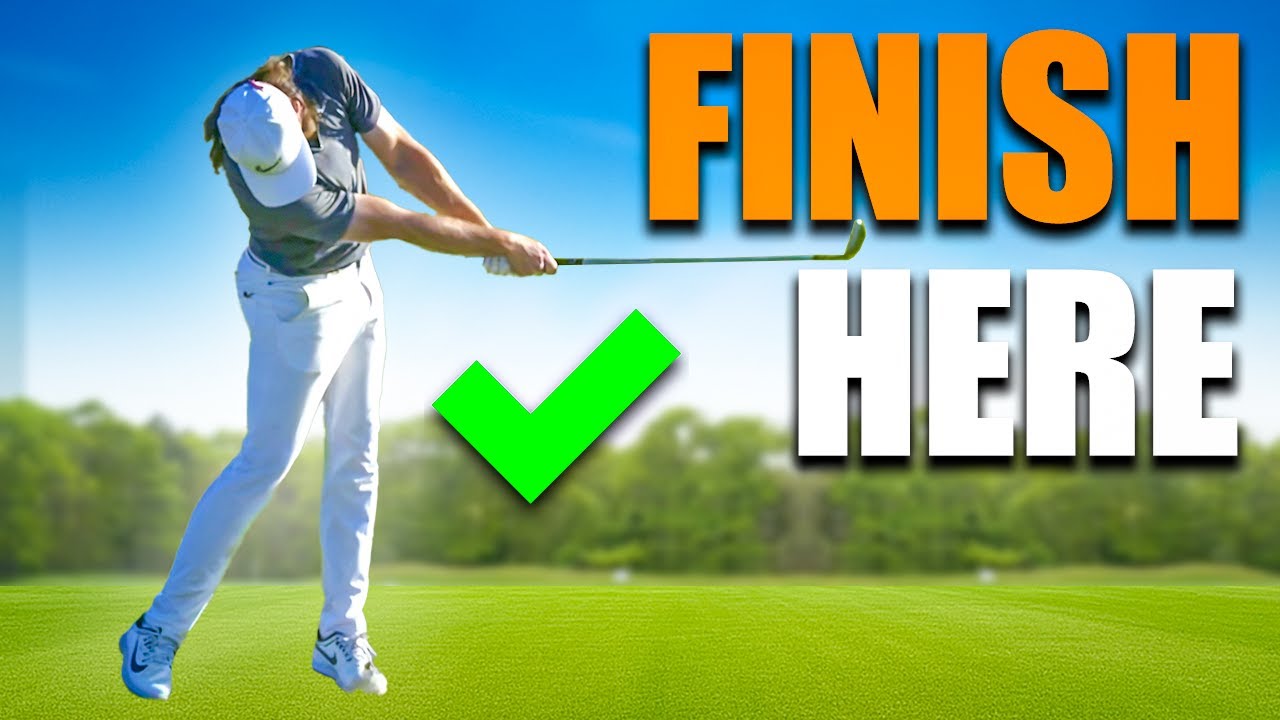
Discover the Tommy Fleetwood secret to perfect golf iron compression—his shortened golf follow through creates more speed and solid contact than traditional swings!
Get Your FREE Golf Breakthrough Playbook https://app.gohighlevel.com/v2/preview/yk8b24qhouv14gnanFkb?notrack=true
📍Work with Darren:
🏌️♂️ In-person (https://e.cps.golf/HollyRidgeLessonbook)
📱 Online through the Skillest app (https://skillest.com/coach/darrenfalkgolf)
🔔 Subscribe to Break 90 Golf for weekly tips and drills to shoot lower scores:
👉 @darrenfalkgolfcoaching
0:00 – 🏌️ Introduction: Struggling with thin shots and poor iron compression?
0:28 – 💇 Tommy Fleetwood’s signature short follow through technique
1:01 – 🎤 Tommy explains why he uses this abbreviated finish (originally a drill!)
1:42 – ⚡ Why shorter follow throughs create MORE speed (whip cracking principle)
2:32 – 🛑 The power of deceleration: How stopping fast generates club head speed
4:19 – 🔨 The “Hit Hard, Stop Fast” drill breakdown and setup
5:52 – ✅ Correct form: Straight arms, maintained wrist angles, club low to ground
7:23 – ❌ Common mistakes: Bent arms, club finishing high, lost wrist angles
11:14 – 🎯 Advanced variation: Using an alignment stick or towel for feedback
13:00 – 📈 Progression: Building from short swings to fuller backswings
Learn how Tommy Fleetwood’s revolutionary approach to the golf follow through can transform your ball striking. This technique—originally developed as a practice drill with his coach Allan—teaches you to “hit hard, stop fast” for maximum golf iron compression. Discover why decelerating properly creates more speed than trying to swing through the ball, and how maintaining wrist angles through impact is the key to solid contact.
What You’ll Learn:
-Why Tommy Fleetwood’s short follow through was originally a punch shot drill to time up his body rotation
-The whip-cracking principle: How deceleration creates speed and power in the golf swing
-How to execute the “Hit Hard, Stop Fast” drill with proper weight forward and wrist hinge
-The three critical checkpoints: straight arms, maintained wrist angles, and club staying low to ground
-Why releasing the club too early causes thin shots, chunks, and poor compression
-How to use an alignment stick or towel behind the ball for instant feedback on your swing path
-The progression from small swings to fuller backswings while maintaining the abbreviated finish
-Why firm grip pressure in your fingers (not light grip) is essential for controlling the club through impact
#TommyFleetwood #GolfFollowThrough #GolfIronCompression
Golfers, do you struggle hitting solid iron shots, not getting any compression on your golf ball? Well, today we’re going to be looking at a golfer that you’re probably very familiar with, and that is Tommy Fleetwood. And there’s one specific thing that he does in his golf swing that I think can help every level of golfer, especially those struggling hitting thin shots, chunking the golf ball, not hitting solid iron shots. So, let’s take a look at what Tommy does and how it can help your game. All right. So, if you watch Tommy Fleetwood when he plays, couple things stand out. One, his hair beautiful. But you’ll notice that all of his followthroughs tend to be very, very short. Okay? Rarely do you see him finish with the club really, really up over shoulder, maybe for a driver, but for the most part, it always looks like he’s got this short abbreviated finish. And he’s actually talked about this and discussed why he likes it in in his swing. started as a practice drill and then it incorporated into his actual golf swing. My shortened follow through. Originally, why why we did that when I was working with Allan, I was inside. I’ve always been a big drawer, but I, you know, I was always pushing the ball further out. I would always like save it with my hands. I’d be wrapping over and all we did was hit punch shots for ages trying to time my body up. Um, get my body to keep It’s all It’s all well and good saying your body to keep moving, but you actually want it timed up. there’s no point keeping it moving and catching everything late and your arms having to catch up. So punch shots for me were all about taking the hands and arms out of it and having everything timed up and then it just pretty much happened that I thought, well, I’m hitting it that good on the range. I might as well play like that and then it stuck. Yeah. Now, why is that so beneficial? Well, two things. The first is actually understanding of where the speed and the power comes from. What I see with so many golfers is the tendency is to try to swing through the golf ball and try to get all their speed somewhere after the golf ball and they end up looking something like this. Okay? They’re worried about getting the club way over their shoulder thinking that the farther I can swing the golf club, the more distance and speed that I can get. Well, really actually doesn’t work that way. The way we need to be looking at power and speed is two analogies I’ll use for you. First would be cracking a whip. Okay. Second would be snapping a towel. Okay. The same principles. What’s happening? And why is the speed and that snap happening? It’s not happening because the whip is continually being pulled around. The speed is happening because of there’s some deceleration. Okay. So, what’s happening when he has that very short abbreviated golf swing is he is slamming the brakes. Okay. Okay, he’s swinging hard, but he’s stopping the swing very, very quickly. Right? Not only is that giving him more control, but it’s actually giving him more speed and more power. Right? So, if you’ve ever hit a shot from underneath a tree branch or anything where you’ve had a very restricted follow through, you might find surprised of how far and how fast that ball jumps off the club face. Okay? And that’s what’s happening here, right? So, when we’re able to learn to decelerate the club properly, we actually start putting more speed into the club head, putting more force down into the golf ball. Right? So, as I’ll hit one here. Okay. So, trying to stop this club very quickly, right? And that ball’s heading out there is going at least threequarters of my actual normal distance. Not really with much of a back swing there either, as you could tell. All right. So now where I really really like this drill with most golfers is my biggest issue with most golfers that I see is the arms tending to pull apart and then also overusing their wrist and having this left wrist going into extension too quickly. Now usually that’s coming because their bottom of their swing is occurring back behind the golf ball. So that’s the first thing we need to address. But we will tend to see a lot of this coming through the golf ball. Now, where I love this drill that we’re going to do is the only way I can do it properly is if I have better control of the forces in my arms and in my wrists. Okay, so here’s how the drill is going to work. The Tommy Fleetwood hit hard, stop fast drill. Okay, and this is a drill I got from my mentor and friend Andy Plameumber. You’ve probably seen this floating around some other um uh YouTube pages as well. It’s a phenomenal drill and we’re going to do it just as it says. We’re not trying to hit super super easy swings. We’re trying to hit this ball hard, but we’re doing so with the shortest followrough that we possibly can. So, first in my setup is I’m going to make sure that I have more weight on my front foot. Okay? And that’s because we’re making a very, very short swing. We don’t really have any time to transfer much weight. So, we’re just going to go ahead and start with it there. Right now, we’re going to start doing this with very, very small swings is how we’re going to learn to train it. Now, if my back swing only goes to here, right? How am I going to be able to create some speed? Well, I’m going to have to start creating some of that speed with my wrist angles, right? So, in my back swing, I’m going to go ahead and make sure I hinge the club that I’ve created some angle with my left arm and my golf club. Right? Now, here’s the key. I’ve created this angle. The key with this drill is maintaining these wrist angles through the golf ball. That’s where my speed’s going to come from, not from me trying to move the club with my hands. Notice what happens to the club. It’s going to move out too quickly. We’re going to bottom out behind the golf ball and then we’re inevitably going to have to bend the arms and then we can’t stop the club close to the ground. Okay. So, first step of this drill is going to be very, very short swing. So, I’m going to take the club back. I’m going to get some wrist hinge here first. And I’m just going to hit one out. Trying to stop this club as soon as I can after the golf ball. So, it’s going to look like this. A little bit of wrist. Okay. And it’s just a little punch shot. Okay. I’ve got my nine iron here. Use something with a little bit of loft that way because the ball is going to come out low. Okay. And again, as we look here, where was my divot? Well, after the golf ball. And what you’re going to find as you’re doing this is you’re gonna have at first probably some very very deep divots and that’s okay especially if you’re not used to ever taking a divot. All right. So again do that again. Going to set my wrist angles here first. Okay. Very very short follow through. Okay. Now notice here I’m going to hold my finish here. What do you notice? One, my arms very very straight. Okay. My arms are really locked out. I couldn’t straighten them probably much anymore. Two, what do you notice about my wrist angles? They’re basically exactly the same as how I started. There has not been any movement happening with the club. The club has not passed my hands coming into the golf ball. And the third thing that I noticed is that the club’s staying very, very low to the ground. Okay? Okay, so we got the arms straight, we got the wrist angles maintained, and we have the club very, very close to the ground. Done incorrectly for the golfer that struggles with taking divots and struggles topping with with topping the golf ball, we’re going to see something that looks like this. Okay? And notice where my finish is. My arms are bent. The club has finished very high off the ground and then it’s also past my hands. We take a look. All right. And this is the biggest issue I see with so many golfers is they do not know how to control their golf club using their arms and using their wrist. And this drill, what we see with looks so nice and Tommy Fleetwood swing can really really go a long way to helping us make that um solid contact that we’re all striving for. So, okay. Again, do it the correct way. So, here’s my setup. And again, these are very short swings. The challenge I would have for you to make is trying to make the shortest swing you possibly can make, hitting the ball as far as you possibly can. Okay, if I did it the opposite, created no wrist angles and then lost my angles coming through. Okay, that ball just rolled out there about 20 feet. All right, and you can see there how there was no compressing on the golf ball. There was nothing on that golf ball. All right, and that’s where a lot of players struggle. Whereas on the opposite end, when I create my wrist angles here first and then maintain them coming through, notice the difference in the sound. Okay? And that golf ball just jumped out there about 80 yards with that golf swing. Okay? I know you can’t see the flight of the ball, but you can hear the sound. You can see that ball jumping right off that club face, right? So do it again. So again, we’re hitting hard. We’re stopping quickly as soon as you possibly can. Weights on the front foot. We’re going to make some wrist angles going back. The club’s hinged up. Butt of the club is right over top of the ball. Okay. And there’s my follow through. Okay. Okay. And again, this position right here, as you look at any good ball striker, they are going to get the club somewhere into this position in the follow-through. Their arms are going to be pretty straight. Yes, there are some players that have a little bit of bend. I want those things to be straight for most every golfer. Okay. Second, their wrist angles haven’t really changed. As we turn back, my left arm and my my left the left wrist and my right wrist are the same. The left wrist is pretty flat and the right wrist has some bent back to it. That positions the club head, the club a the hands, excuse me, ahead of the club head. And now I’m just keeping that all the way through the swing. Again, very short follow through. I can do that. Done incorrectly. Again, what is that going to look like? It’s going to look the opposite. It’s going to look something like this. Okay. Okay. Now, while I made good contact with the ball, notice there’s no divot. There’s no compression. And then look where my follow through is. Okay. This is why I love this drill is because it’s very, very easy to tell whether or not you did it right. You really can’t cheat it. Even if you hit an okay shot, you can just tell and look at the finish. Did you do it correctly? All right. So, again, here’s the drill. Set the wrist angles up first. Short follow through. Okay. And that ball’s just jumping off the club face. Okay. So, that’s going to be the first drill that we’re going to do. Okay. Now, a variation that we can do of this drill, I’m just going to move this stick here, is you’re going to take one of these alignment sticks and you’re going to place it behind the golf ball. Now, if you’re not up for the challenge of the alignment stick, you can simply use a towel of some sort. Now, I’m going to start with it about a grip length apart. Okay? But what this is going to force me to do, what can I not do coming into the golf ball? Release my wrists, bend my arms, because where’s that thing going to be? It’s going to hit back. All right. So, I’m going to start it pretty close here. All right. Okay, now I’m just going to slowly start moving that in a little closer. Again, don’t feel the necessity to use this. You can use a towel. Anything would work. Okay, I’m going to get this really tough. Now, I don’t have any room to throw or release my wrist. If I release the wrist back here, then we’re going to have more of this look coming through the golf ball. All right, so my weight’s moving forward. Make a little swing back. Pick it up over the stick. And that’s as good as I can hit one right there. Okay. Okay. And then again, notice where my follow-through is. Arms are straight, club finishing close to the ground. And a cue I like to give some people sometimes is notice my thumbs. My thumbs are pointed down to the ground as opposed to towards the target or even worse up to the sky. Okay. So, that’s a little variation that you can do is just put a towel, a stick, anything really, something behind the golf ball just to give you even more feedback and to teach your brain that, hey, I’ve got to have that club higher off the ground. And if it’s higher off the ground coming down, it’s going to be lower to the ground coming through as opposed to it being low to the ground and then getting higher as I work through the golf shot. Okay. So, now that I’ve learned to train that with these very, very small swings, all I’m going to do is simply allow myself to have a longer back swing, but still trying to keep that very, very short follow through. Right? So, here was the drill. Setting my wrist angles, had a little bit of a pivot maybe, but again, very short follow through. And now, I’m just going to let this club travel a little further back with the goal of trying to stop the club as soon after the ball as I possibly can. Right. So, little longer back swing. Going to have the weight a little bit forward here. Still little longer back swing. Okay. All right. That one worked pretty well. Notice where my club hit the ground right after the golf ball. Still working down as opposed to the poor golfer where the club is working up through the hitting area. All right. Set that one again. Try to go a little bit longer back swing here. Now still sh same short follow through weights forward. Okay. And again look where my finish is. Right. Again what you’re going to notice to start with. Yes. That’s too deep. Right. That is that’s too deep. That’s too steep. But for the golfer that is struggling to make a divot, that is struggling to hit solid iron shots, I want you to go there first. I want you to learn what too much of it is. All right. So now from there, as we continue progress through a longer swing. Okay, now we can start letting that club go just a little bit further. But I’m still trying to get that feeling of my arms stretched out, the club low to the ground, and my thumbs pointed down as well. Trying to make sure I get to that spot. But now I’m going to let myself go just a little bit longer in the follow through. Not quite so close to the golf ball. Okay. And that’s a much better one there. All right. That ball jumped out there pretty good. Okay. And then look where my follow through is. Okay. Okay. Now, people will say, “What do I do from here?” Well, this is the end of my follow through throw. Notice where my shoulders are. My shoulders are rotated 90° from where they started. My hips have rotated. The only thing I would do from this point is just let my hands rehinge the golf club and maybe then let my soften my arms a little bit. And there’s the follow through. Okay, that’s a much more controlled follow through. It’s going to allow you to hit more solid iron shots rather than worrying or trying to get this club way up over your shoulder, which I see so many people do, right? Something that looks like that, thinking that’s how they’re going to create speed. And again, notice how I barely even hit the ground, right? So again, what can we learn from Tommy Fleetwood? A lot. Okay. But the thing that we’re going to focus on today and what I think everyone can do a better job of is learning to appreciate this short follow through. All right. That shorter follow through is going to allow you to hit more solid iron shots. It’s going to allow you to hit the ball farther and it’s also going to simplify things obviously not worrying about this club having to travel somewhere up over your shoulder. So final one. Wait a little bit on the front foot. Gonna let the club travel just a little bit farther on the follow through. Here’s the back swing. Okay. The only way that I can keep that club stopping there with that much speed is if I have really good control of my arms and wrists. And then from there, I would just simply let the club right hinge a little bit with my wrist. Maybe my arms bend just a little bit. Okay. Now, one thing as you might notice when you do this, right, is grip pressure. Now, how many times have we been told that we need to make sure that we are holding the club very, very lightly, like we’ve got a baby bird, okay, we don’t want to kill the bird, or that maybe we’re trying to hold some toothpaste. We’re not trying to squeeze the toothpaste. Good luck doing that and this drill. I don’t believe you should have very, very light grip pressure. If anything, I want to see most golfers feeling very firm with their fingers. Now, I’d want the wrist to have some flexibility movement. And I wouldn’t want necessarily the wrist to be very very tight, but the fingers absolutely I’m going to feel some pressure there because if I have very light grip pressure, look how easy it would be for this club to start moving. All right, through in my hands. So don’t be afraid to squeeze, have a little bit of pressure in those fingers. All right, and again, our goal with the drill here, hitting hard, stopping quickly. And that’s our goal is to stop the club as soon as I can. If I can do that like Tommy does, I’m in control of my club. I’m in control of my ball flight. So again, hit hard, stop quick. See how quickly I can stop this one. Okay. Need to start playing golf like that with that follow through. All right. But again, notice what’s happening. Divots are getting deeper. Club’s working more down. I’m getting better compression. Thank you everybody for watching this video. I hope you found it helpful. If you have not already done so, please make sure that you like and subscribe to this channel. That will help me to continue to put out content. If you would like to work with me, we may do so in person at Holly Ridge Golf Club on Cape Cod, or we can do so through the Skillist app online. And you’ll see descriptions to both of those in the comments below. If there’s anything you would like to see in future videos that you think you need in order to help you break 90, please make sure to mention it in the comments. As always, I appreciate you joining me and look forward to seeing you again next time.

8 Comments
Do you hit the ball better with a short follow through?
Really good video! Tommy is on a heater 🏆
i know when i hit practice punches i flush it almost always. so good for contact and arm extension to target. Great video Darren!
Great video! We should all mimic this!!
0:15 Eggspecially?
Great drill! Works every time !
If I could finish there I wouldn’t be on here looking for short cuts😖
this can literally help everybody!