Zach Johnson shows a couple of putting drills that helped him become one of the best lag putters on the PGA Tour.
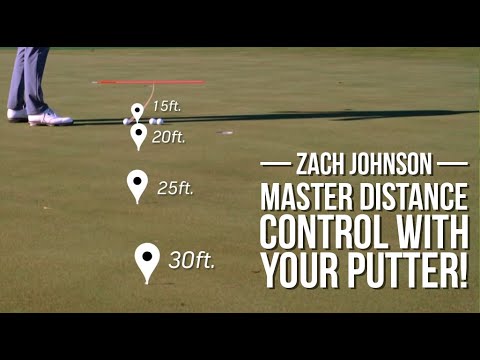
This drill right here, Brian, I’ve got four T’s situated uh to this cup here. 15 feet, 20 feet, 25, 30 feet. It’s a speed drill. Granted, this one’s uphill, but I’ve got that stick there uh about 2 feet behind the hole. And what I like about this drill is it gets me more into the speed and the feel of putting. Um we’ve done our technique, we’ve done some makes around a hole. Now, we’re going to go into three balls and I’ve got to get three golf balls in a row. Once again, going through my routine. Why not, right? It’s transferable practice. Let’s go through it. Let’s make it as if it’s a, you know, game situation here. I’ve got three putts where I’ve got to get it to the hole. Well, there’s a bonus. Get it to the hole, but yet not touch that rod. Typically, I would do my routine and just get into it and and and hit the putts. Okay, a lip out there. Now, I made my I made my first two putts. I’ve got all three putts to the hole and none of them hit the none of them hit the alignment stick. So, from here, I can go to the next station. So, here, this one’s about 20 ft uphill. Got to get it to the hole. That one got there. Wow, Jack, you’ve got this one figured out. Yeah, this one’s a little easier. a little uphill, but those downhill sidehill putts are the ones that’ll give you fits. So, three here ideally, go hurry, go, go. You got it. Okay. So, now I can go to the next station and so on. It’s just a great drill to really focus on speed. Make sure you’re getting it to the hole to give it a chance, but yet also not hitting it too far by so you can avoid those three putts. Zach, we’re talking about different length putts here. So, I’m I’m curious to get your take on the difference in the length of your back swing. Sure. Say from inside of 10 feet to outside of 20 ft, how much that varies, how much you think about that, and also how consistent the pace of your stroke is maintained from a mid-range putt to a longer putt. Sure. Sure. You know, I’ve always been taught um that you got the putter, you know, you take the putter back and you let go of it, right? Well, if if it’s like a pendulum like that, it’s not going to go as far through as it does on the way back. That’s just gravity, and that’s the way it works. And then when you put a golf ball in front of it, that force is that the golf ball is going to slow it down even more. So, I’ve always liked that kind of 60/40. 60% backstroke, 40% throughstroke, but yet being aggressive through it, too, you know? But as far as length goes, I’ve always kind of like 6040. It just feels natural to me. taking a stroke. It just seems like there’s just not many moving parts. Nice, good, aggressive stroke on the way through, holding that finish. Um, it just seems to work. Talk about transition too quickly, Zach. When when you’re talking about a mid-length putt like this, you know, a lot of amateurs at home, people watching at home have a tendency to have a quicker transition, which is makes judging the speed almost impossible on a consistent basis. Talk about your transition from your backstroke to your through stroke. Yeah. No, that’s a good point. I mean, one thing I’ll also add to that that helps with that transition, uh, I is if if you guys have noticed in my routine, you know, I take one practice stroke here kind of down, just kind of getting situated, getting parallel to my ball. So, one practice stroke looking down and then my last stroke, I’m looking at that hole for speed, right? It’s a it’s it’s kind of just it’s a feel thing. I mean, I truthfully, I could probably take two or three of them just doing that, right? Just to kind of get used to it if it’s a long putt. But in my routine, my last look is up. And so then when I get into it, it’s just speed. And right here, when I when I take that putter back, there’s not a whole lot of moving parts. There’s not much jerking going on. It’s just the putter almost allows it. It’s almost as if it it’s working itself. I I’m I’m letting the freedom of my setup, the freedom of my shoulders and my hands just kind of work all together, and that transition should be smooth from the backstroke to the to the throughstroke. I think that’s a great point for the viewers at home. Transition is everything when it comes to getting consistent, solid, consistent putts. Welcome back to Golf Channel Academy, the Zack Johnson putting special. And Zach, we’ve come to kind of an in between distance here. Maybe you hit a good shot on a par4, but you are stuck with a a 30footer here trying to avoid a three putt. Walk us through this drill and how this helps you avoid those three putts. Yeah, I mean, you said it. you know, it’s not like every hole we’re going to be hitting within 10 to 15 ft and it feels like a bird opportunity. So, those putts that are kind of in that, you know, 35 40 plus range, uh, this is a drill that I like to do, especially the week of a tournament on site. I mean, at home, the speeds might be different, but on on tournament site venues, speed is so imperative. So, what I like to do is I like to go four or five putts uh in that 40 foot range where I got to two putt every one of them. And they got to be consecutive. And if I don’t, I got to start back over. So, it’s a good incentive to get done quickly because it’s not very easy. And what I also like is that this is this is situational. So, I’m going to use these two pins here. Granted, when I’m putting, they’re usually not in, but so you can see it. Um, and I’m going to putt up to this hole right here. I’m going to go through my routine. I’ve already read the putt. Uh, it’s about a foot outside the hole. So, I’m going to get in here, go through my full routine, and try to, you know, try to get this within that that two, three foot circle, and get a manageable two putt out of it. First putt, a little short, about two feet, but hey, I got to putt it. It’s still still a putt you got to manage. Again, going through my routine, making sure every putt matters. All right, there’s one down. So, one out of four there. I’ll step back down here and come uh come towards that hole over there. And as you can see, this one’s a little more difficult. I don’t know if you can tell at home, but it’s downhill. It’s left to right. It’s a lot more difficult than that uphill right to left. So, it’s a putt I, you know, I’ve got to pay attention to. I’ve kind of got my line now. Uh, it’s about a two-ft break, two and a half foot break and putt, but I’m I’m more speed here, Brian. Like you said, I’m trying to get in that circle. You know, ideally, just like the last segment, I want to get it past the hole so I can have an uphill putt. But it’s not like I’m keying in on just trying to leave it, you know, two foot behind the hole. I’m trying to just get the speed down so I can tap it in. So, obviously not a putt you’re thinking about necessarily making, but you are trying to find that three-foot circle. But I think what’s great about this drill, Zach, is that it puts pressure on the first putt. It also puts pressure on the second putt. So, it’s once again, game time situations brings the golf course to the practice. 100%. Very realistic, right? Very transferable. It’s a game that I can do with my caddy. He’ll pick the putts for me. I mean, he’s not going to pick easy ones cuz that’s what he does. We might even have a little bit on it, you know? I mean, why not, right? Get get my juices going. Uh, maybe it’s dinner, maybe it’s lunch, whatever. But, um, so right here, I mean, I’ve got all of what, three and a half, four feet, probably closer to four feet. But, I got a putt that breaks. Very realistic. I’m not going to hit a perfect lag putt every time. So, here, this putt matters. I mean, I’ve got to really key in on my my speed, my rhythm of my stroke. There you go. three putt. Now I got to start all over again. Try to get four consecutive two putts in a row. And for the sake of time, I mean, I would go around this green picking random putts 40 ft or more trying to two putt. But it’s a great drill to kind of get me in the mode of thinking speed of transfer or practice because it’s very realistic as to what I’m going to have on the golf course. I’m not going to have 10 feet every time for birdie. And what I like about it is it’s instant feedback. It it tells me exactly what I need to know when it comes to the speed of my putting. And obviously doing this drill in a PGA Tour event, you have to have room. You know, depending on the size of the practice screen could limit this practice. But I think it’s a great drill. You see a lot of players using this drill because, like I said earlier, not only makes you focus on the first putt, but it makes that second putt just as important, just like it is under competition on the golf course. No question. No question. And it’s all it’s you know what a lot what what I what I really I feel like I got to hit a quality putt. Dr. Mo my Morris Pickkins my sports psychologist the one thing that he’s always trying to get on me. Hey did did you hit a quality putt? And that doesn’t mean that I picked it up out of the hole. That means did I go through my routine? Were my looks the same? Were my you know was the rhythm of my stroke the same from the previous or whatever. Was it a quality stroke? Did you hit a quality putt in the center of the face? That’s what’s that’s what’s important because over time, the more quality putts I’m going to have, the less three putts I’m going to have and more often I’m going to pick that ball up out of the hole quickly. Got great drills,